BRSR Explained: What It Is, Who Needs to File It, and What Happens If You Don't
Reporting
PS Team
July 12, 2026
Table of Contents
If you work at a listed company in India, you've probably heard the term "BRSR" in board meetings, finance reviews, or compliance discussions. Many people know it's mandatory for certain companies, but aren't entirely sure what it involves or why it matters.
This guide explains BRSR in simple terms, covering what it is, who needs to file it, what information it includes, and what happens if companies fail to comply.
What is BRSR?
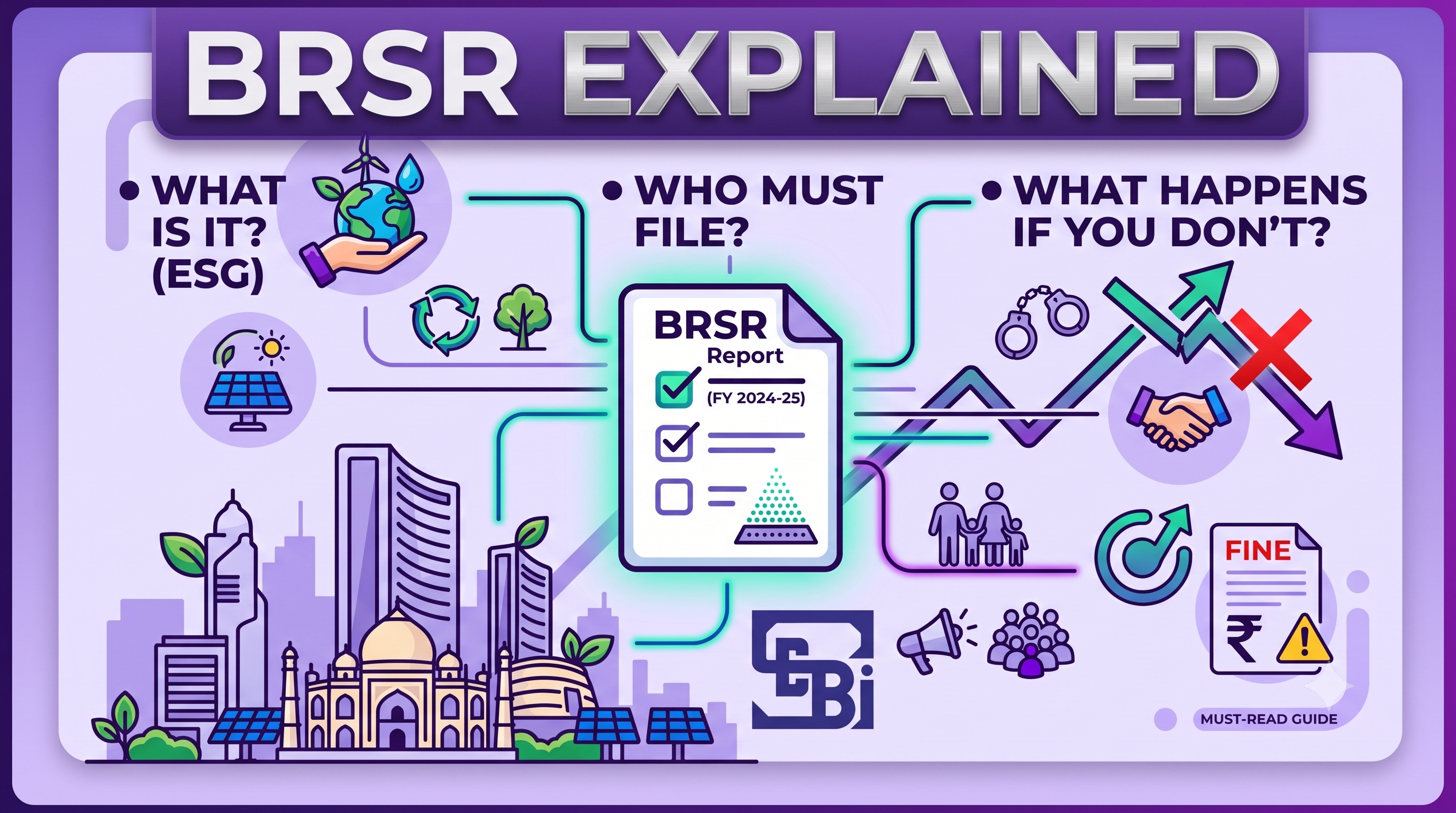
BRSR stands for Business Responsibility and Sustainability Report.
It is SEBI's ESG reporting framework for listed companies in India. Through BRSR, companies disclose how they manage environmental, social, and governance (ESG) issues alongside their financial performance.
Rather than focusing only on profits, BRSR helps investors understand how responsibly a business operates.
The report includes disclosures such as:
- Greenhouse gas emissions
- Energy and water consumption
- Waste generation and management
- Employee health and safety
- Diversity and equal opportunity
- Human rights practices
- Corporate ethics and governance
- Customer and supplier responsibility
Think of BRSR as a report card that measures both business performance and responsible business practices.
Why did SEBI introduce BRSR?
Before BRSR, listed companies reported under the Business Responsibility Report (BRR), introduced by SEBI in 2012.
While BRR encouraged responsible business practices, most disclosures were narrative. Companies described their policies and initiatives in their own words, making it difficult for investors to compare one company with another.
To improve transparency and consistency, SEBI introduced BRSR in May 2021.
Unlike BRR, BRSR focuses on measurable disclosures, standardized reporting, and greater accountability.
Who needs to file BRSR?
BRSR is mandatory for the top 1,000 listed companies in India by market capitalization.
The implementation timeline is straightforward.
- FY 2021-22: Voluntary reporting
- FY 2022-23 onwards: Mandatory for the top 1,000 listed companies
A few important points:
- Industry does not matter. Manufacturing, IT, banking, pharmaceuticals, retail, infrastructure, and other sectors all follow the same requirement.
- Companies outside the top 1,000, including SME-listed entities, can voluntarily publish BRSR to demonstrate transparency and strengthen investor confidence.
What does a BRSR report include?
The framework is divided into three sections, each serving a different purpose.
Section A: General Disclosures (26 Questions)
This section establishes the company's profile and reporting boundary.
It includes:
- Corporate identity
- Products and services
- Operating locations
- Employee and worker information
- CSR details
- Business responsibility issues
- Reporting boundary
Getting this section right is critical because all subsequent ESG disclosures depend on the reporting boundary defined here.
Section B: Management and Process Disclosures (12 Questions)
This section evaluates governance rather than performance.
It asks questions such as:
- Has the board approved responsible business policies?
- Are these policies implemented across the organisation?
- Do they extend to suppliers and value chain partners?
- Are they periodically reviewed?
The objective is to determine whether responsible business practices are embedded within the organisation or exist only on paper.
Section C: Principle-wise Performance Disclosures (108 Questions, across 9 principles)
This is the largest and most data-intensive section of BRSR.
Companies disclose their performance against the nine principles of the National Guidelines on Responsible Business Conduct (NGRBC).
These principles cover:
- Principle 1: Businesses should conduct and govern themselves with integrity, and in a manner that is Ethical, Transparent and Accountable.
- Ethics, transparency, and accountability
- Principle 2: Businesses should provide goods and services in a manner that is sustainable and safe.
- Sustainable products and services
- Principle 3: Businesses should respect and promote the well-being of all employees, including those in their value chains.
- Employee well-being
- Principle 4: Businesses should respect the interests of and be responsive to all its stakeholders.
- Stakeholder engagement
- Principle 5: Businesses should respect and promote human rights.
- Human rights
- Principle 6: Businesses should respect and make efforts to protect and restore the environment.
- Environmental protection
- Principle 7: Businesses, when engaging in influencing public and regulatory policy, should do so in a manner that is responsible and transparent.
- Responsible public policy engagement
- Principle 8: Businesses should promote inclusive growth and equitable development.
- Inclusive growth
- Principle 9: Businesses should engage with and provide value to their consumers in a responsible manner
- Customer value and responsibility
Each principle contains two categories of disclosures.
Essential Indicators
Mandatory disclosures that every applicable company must report.
Leadership Indicators
Voluntary disclosures that demonstrate more advanced ESG practices.
What is BRSR Core?
BRSR Core is a focused subset of the broader BRSR framework.
It identifies the ESG indicators that require independent third-party assurance rather than self-declaration.
The indicators broadly cover three areas.
Environmental
- Green-house gas (GHG) footprint
- Energy footprint
- Water footprint
- Waste management - Embracing circularity
Social
- Employee well-being and safety
- Gender diversity
- Fair wages
- Inclusive development
Governance
- Fairness in Engaging with Customers and Suppliers
- Open-ness of Business
Unlike the broader BRSR framework, these disclosures require independent verification through reasonable assurance.
SEBI is implementing this requirement in phases.
- FY 2023-24 : Top 150 listed companies
- FY 2024-25 : Top 250 listed companies
- FY 2025-26 : Top 500 listed companies
- FY 2026-27 : Top 1,000 listed companies
By FY 2026-27, every company required to file BRSR will also require independent assurance for BRSR Core.
What happens if a company doesn't file BRSR?
For companies covered under SEBI's Listing Obligations and Disclosure Requirements (LODR), BRSR is a mandatory part of the annual report under Regulation 34(2)(f).
Failure to comply can result in:
- Non-compliance with SEBI listing obligations
- Increased regulatory scrutiny
- Questions from investors and analysts
- Lower confidence among lenders and customers
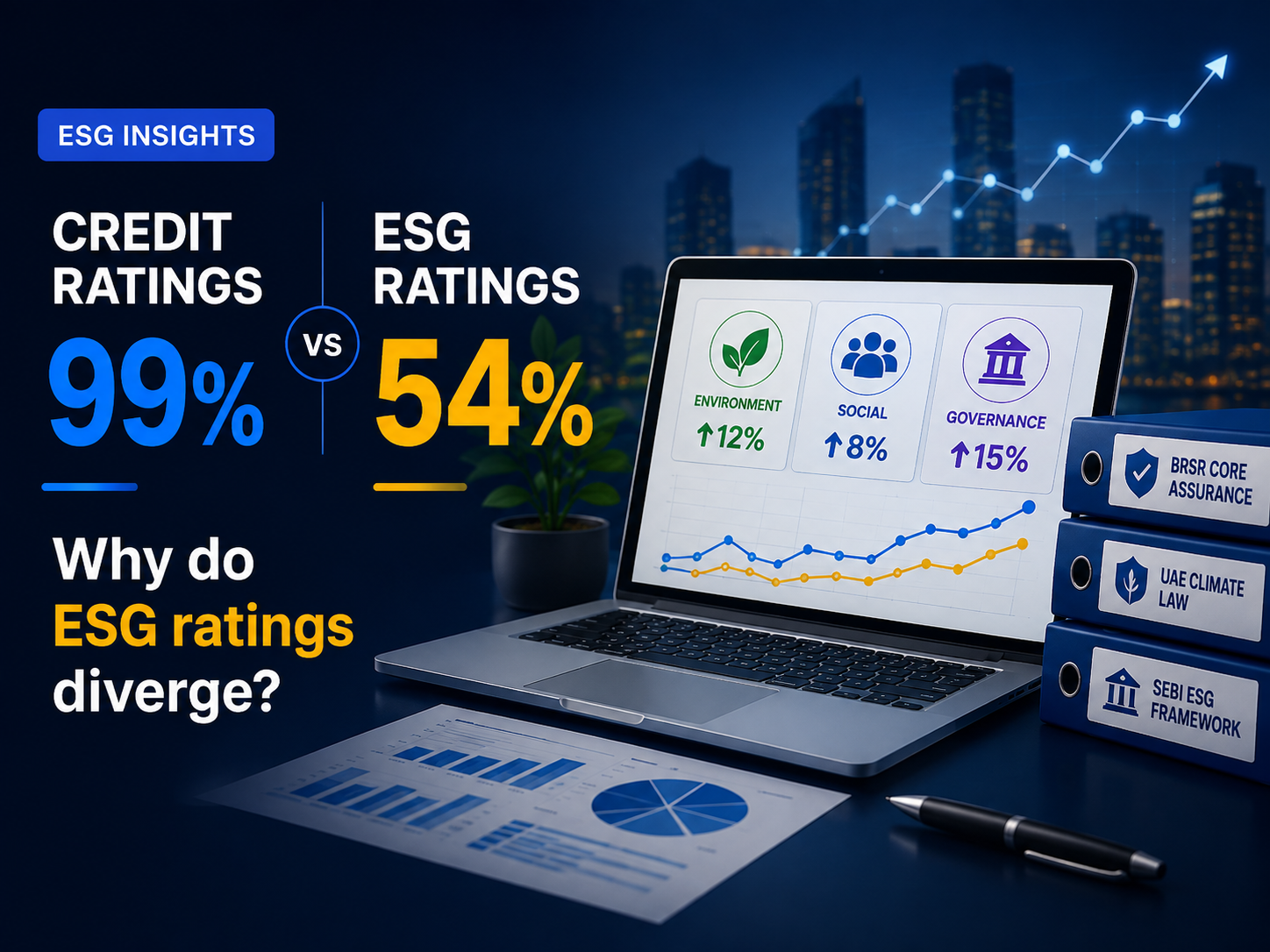
- Negative impact on ESG ratings
- Additional effort to address compliance gaps later
Beyond regulation, many institutional investors, global customers, and procurement teams now review ESG disclosures during investment and supplier evaluations.
A missing or incomplete BRSR can quickly become a commercial disadvantage.
Why BRSR matters beyond compliance
Many organisations initially approach BRSR as a reporting exercise.
In practice, it becomes much more than that.
Preparing a BRSR often reveals where important business data is fragmented across departments, inconsistent, or missing altogether.
Companies that establish reliable ESG data processes gain benefits that extend beyond compliance.
They can:
- Make better operational decisions
- Respond more quickly to investor and customer requests
- Improve internal governance
- Prepare more efficiently for future assurance requirements
- Build greater trust with regulators and stakeholders
As ESG reporting expectations continue to evolve, organisations with mature data management practices will be better positioned to adapt.
How companies can simplify BRSR reporting
Understanding the BRSR framework is only the first step. For most organisations, the bigger challenge is collecting accurate data from across the business, validating it, and maintaining the evidence required for reporting and independent assurance.
Finance, HR, procurement, operations, sustainability, and facility teams all own different pieces of the information needed for BRSR. When this data is managed through emails and spreadsheets, reporting becomes time-consuming, error-prone, and difficult to audit.
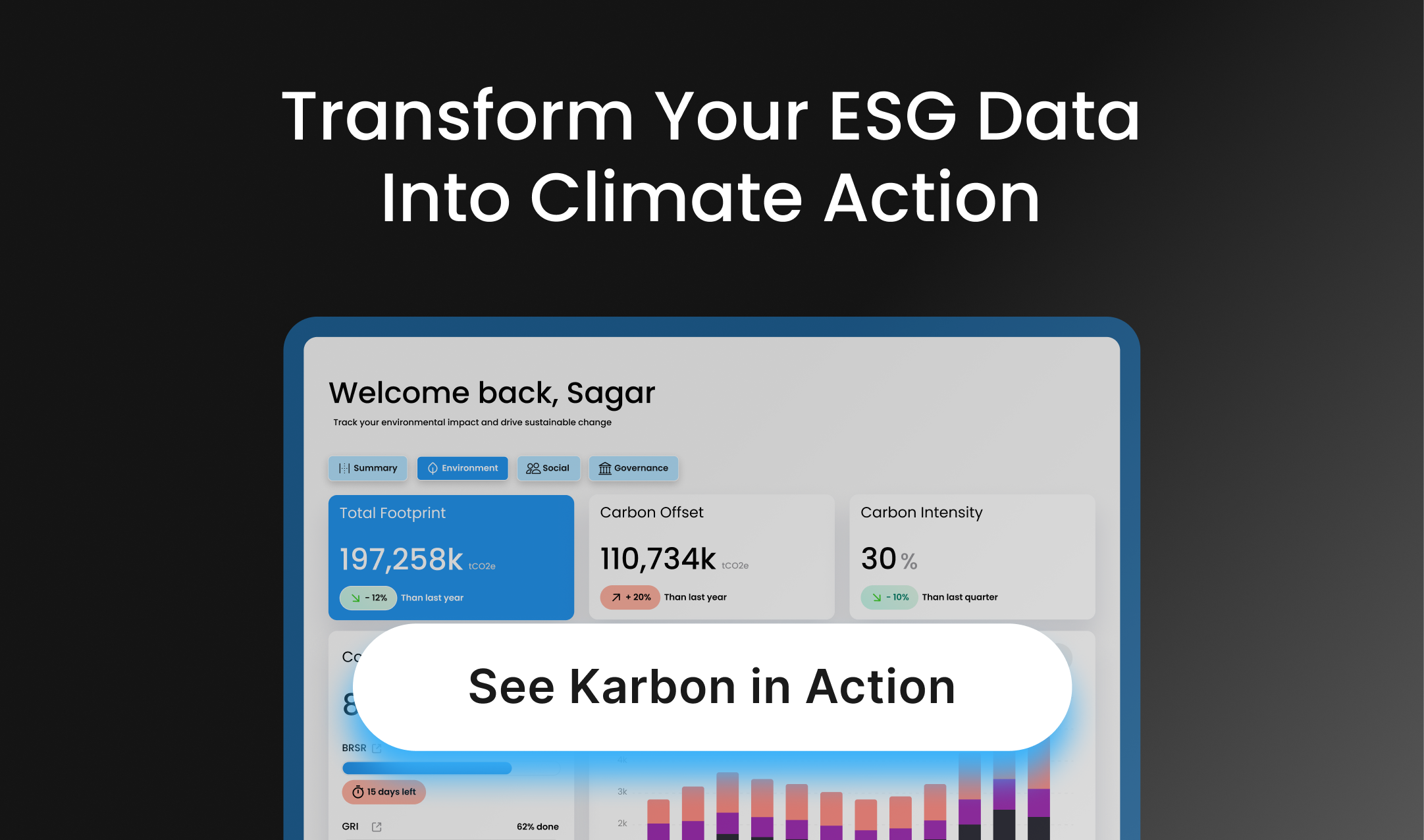
Karbon brings these workflows together in a single platform, helping organisations:
- Capture ESG data across business functions
- Track BRSR indicators in one place
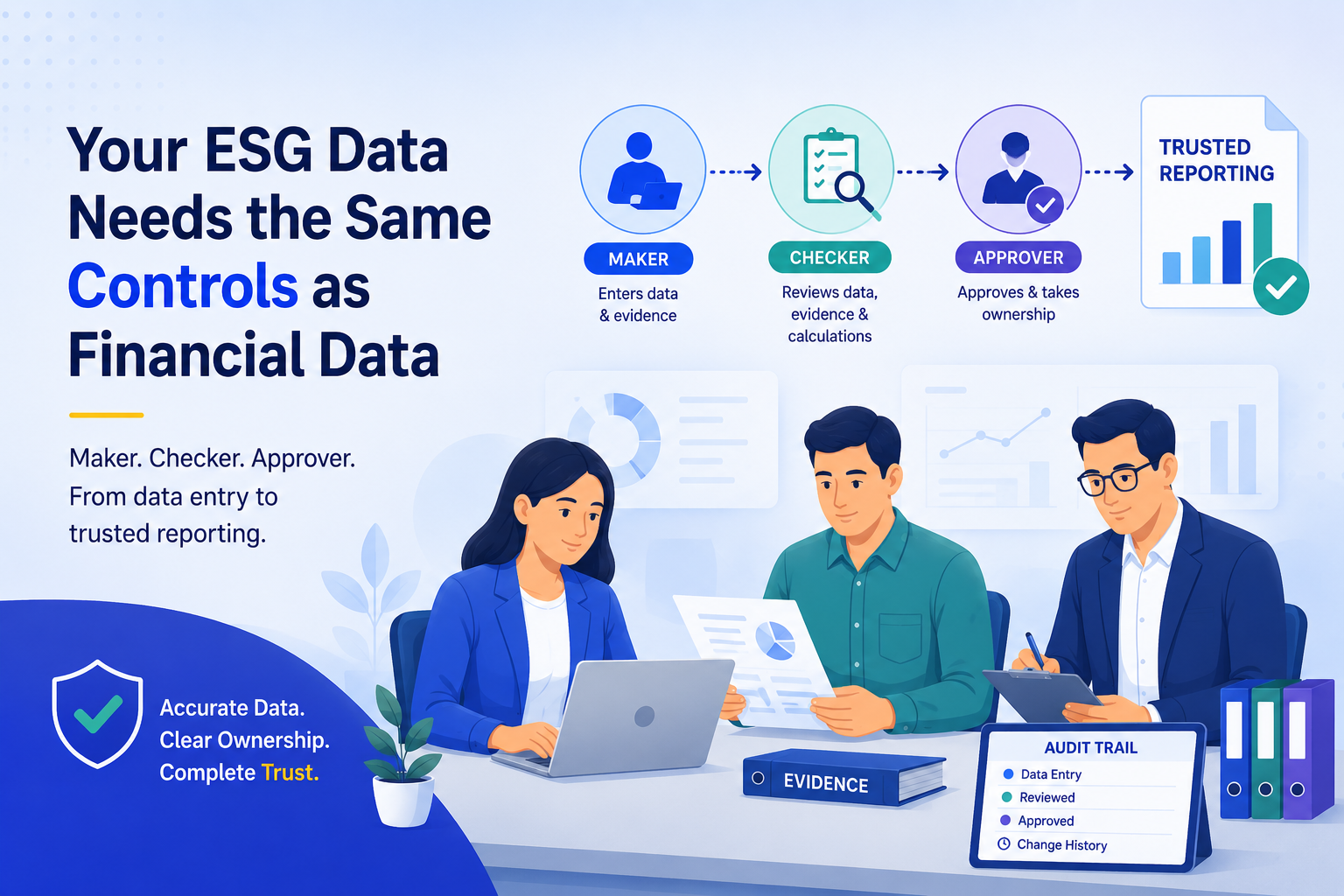
- Maintain supporting documents and audit evidence
- Automate calculations and reporting workflows
- Monitor reporting progress through dashboards
- Stay prepared for independent assurance
Trusted by organisations managing ESG at scale
Today, Karbon supports:
- 100+ organizations
- 1,000+ facilities globally
- Listed companies, public sector enterprises, and multinational organisations
- Organisations across manufacturing, energy, infrastructure, hospitality, telecom, financial services, technology, and more
Leading organisations including IRFC, IRCTC, Rail Vikas Nigam Limited (RVNL), L&T, Indus Towers, NESR, Atmosphere Hotels & Resorts, Data Patterns, and many others trust Karbon to simplify ESG data management and streamline their BRSR reporting process.
Frequently Asked Questions
Is BRSR mandatory?
Yes. It is mandatory for the top 1,000 listed companies in India by market capitalisation.
What is the difference between BRSR and BRSR Core?
BRSR covers the complete reporting framework, while BRSR Core focuses on selected key indicators that require independent assurance.
Can companies outside the top 1,000 file BRSR?
Yes. Companies not covered by the mandatory requirement can voluntarily publish BRSR to improve transparency and strengthen stakeholder confidence.
Does BRSR require third-party assurance?
The full BRSR does not. However, BRSR Core requires independent assurance for applicable companies under SEBI's phased implementation.
Whether you're preparing your first BRSR report or looking to replace disconnected spreadsheets with a structured, audit-ready platform, Karbon helps you simplify every stage of the reporting journey, from data collection and evidence management to final disclosure.
Ready to simplify your next BRSR submission?