India Inc., Meet Your Newest ESG Obligation: Scope 3 Category 16
Compliance & Regulations
PS Team
April 22, 2026
Table of Contents
What You Need to Know
The rules of carbon accounting just changed for the first time since 2011.
On March 31, 2026, the GHG Protocol published a 126-page update introducing a brand new "Category 16" for Scope 3 emissions. If your company earns fees from transactions, loans, licenses, insurance, or digital platforms—you may now have carbon accounting obligations you didn't know existed.
Two changes matter most for Indian businesses:
- New Category 16: A new category for "other value chain activities" including what's called "facilitated emissions"
- 95% Rule: You must now report at least 95% of your required Scope 3 emissions—no more vague exclusions
Why this matters: Financial institutions, fintechs, insurers, NBFCs, digital platforms, and oil distributors in India need to understand these changes now—before they become mandatory.
What Actually Changed
For fifteen years, Scope 3 had 15 categories covering everything from purchased goods to employee commuting. But the framework had a gap: it couldn't properly account for companies that enable emissions-generating activities without directly producing anything.
Think about:
- A fintech platform processing UPI payments
- An insurance company providing coverage to coal plants
- A marketplace connecting buyers and sellers
- A bank underwriting a corporate bond
These businesses don't manufacture products or burn fuel directly. But they enable activities that generate massive emissions. Until now, there was no clear way to account for these "facilitated emissions."
Category 16 closes that gap.
Understanding "Facilitated Emissions"
The GHG Protocol defines a facilitated activity using three criteria—all must be true:
- You enable or influence the activity Your services, products, or infrastructure make the emission-generating activity possible
- You never own or operate it You don't control the actual emission source at any point
- You earn money from it Your business generates transactionally recorded revenue from enabling the activity
Real-world example: A digital payment platform processing ₹10 crore in transactions for high-carbon purchases. You don't sell the products. You don't ship them. But you facilitate the transactions—and earn fees for doing so. Under Category 16, those enabled emissions now have a reporting pathway.
The Eight Subcategories of Category 16
Category 16 isn't one bucket—it's eight distinct subcategories targeting specific business models:
16.1 - Insurance and Reinsurance (Optional)
Covers insurance-associated emissions of insured parties and emissions from claims payments. References PCAF Part C methodology.
Who this affects: Life Insurance Corporation, HDFC ERGO, ICICI Lombard, New India Assurance
16.2 - Underwriting and Issuance (Optional)
For companies arranging investments on behalf of clients—corporate underwriting, debt and equity issuance. Uses PCAF Part B methodology.
Who this affects: Investment banks, merchant banks, underwriters arranging IPOs or bond issues
16.3 - Other Financial Services (Optional)
The broadest category covering:
- Advised investments
- Pension fund contributions
- Cash deposits at banks
- Charitable donations
- Derivatives and short positions
- Undrawn loan commitments
Who this affects: Banks, asset managers, pension funds, advisors
16.4 - Licensing (Optional)
Covers emissions from licensing arrangements—both physical product licensing (trademarks) and intangible licensing (software).
Who this affects: Software companies, brand licensors, technology platforms
16.5 - Distribution of Fuel/Energy (REQUIRED - Only Mandatory Subcategory)
For companies that transport, transmit, or deliver fuels and energy without purchasing or owning the commodity.
Who this affects: Pipeline operators (GAIL, IGL), grid transmission companies (Power Grid Corporation), fuel logistics companies
Why it's mandatory: These distributors directly enable the use of the most carbon-intensive commodities
16.6 - Commodities (Select) (Optional)
Certain commodity trading and holding activities not captured elsewhere.
Who this affects: Commodity traders, trading houses
16.7 - Cryptocurrency (Optional)
Emissions from producing, creating, and storing fungible and non-fungible tokens, including data infrastructure.
Who this affects: Crypto exchanges, blockchain companies, NFT platforms
16.8 - Other Facilitated Activities (Optional)
Covering below:
- Brokers and agents
- Travel booking platforms
- Two-sided marketplaces (e-commerce platforms)
- Payment systems (both product transactions and digital money transfers)
- Fourth-party logistics providers
- Port operations
- Performance-based advertising
- Debit card transactions
Who this affects: Paytm, PhonePe, Flipkart, Amazon India, MakeMyTrip, logistics aggregators
The 95% Boundary Rule: No More Selective Reporting
The second major change is Revision B1—a strict minimum boundary requirement.
The rule is simple: Companies must report at least 95% of total required Scope 3 emissions. Exclusions are capped at 5% cumulatively.
What this replaces: Previously, companies could "disclose and justify" exclusions with qualitative reasoning like "not material" or "data not available."
What's required now: Exclusions must be quantitatively validated annually. You must prove—with numbers—that excluded categories fall within the 5% cap.
The TWG vote: 87% of Technical Working Group members supported this revision.
Why This Matters for Indian Companies
Most Indian organizations currently exclude multiple Scope 3 categories with generic justifications. That language will no longer satisfy the revised standard.
Example: You can't just say "Category 15 (investments) isn't material to our business." You need to calculate what percentage of your total Scope 3 emissions Category 15 represents, and prove it's under 5%.
Every excluded category must be quantified—even roughly—to demonstrate it falls within the 5% threshold.
What This Means for Specific Indian Sectors
Financial Institutions and NBFCs
The structural shift:
- Category 15 is being narrowed to true "financed emissions" only—investments where you provide capital and hold a claim.
- Insurance, underwriting, derivatives, cash deposits, and advisory services are moving to Category 16
- Category 15 now applies to ALL companies, not just financial institutions.
What you must track: Any company holding joint ventures, minority stakes, or debt investments must report investee Scope 1, 2, and 3 emissions.
Examples: HDFC Bank, ICICI Bank, SBI, Bajaj Finance, Aditya Birla Capital
Fintechs and Payment Platforms
Your exposure: Subcategory 16.8 covers payment systems for both product transactions and digital money transfers.
What this means: India's UPI-powered fintech ecosystem—processing billions of transactions monthly—now has a theoretical emissions reporting pathway under the revised framework.
The question: Do you report emissions from all transactions you facilitate? The guidance is still evolving, but the category exists.
Examples: Paytm, PhonePe, Google Pay, Razorpay, Instamojo
Insurance Companies
Direct impact: Subcategory 16.1 explicitly addresses insurance companies, referencing PCAF Part C as the recommended methodology.
What you report: Insurance-associated emissions from your underwriting portfolio—the emissions of the businesses and assets you insure.
Examples: LIC, HDFC Life, SBI Life, Max Life, ICICI Prudential
Oil and Gas Distributors
Mandatory requirement: Subcategory 16.5 is the ONLY required Category 16 obligation.
Who must comply: Pipeline operators and fuel distributors that transport commodities without taking ownership must account for both upstream and downstream emissions of the distributed fuel.
Examples: GAIL, Indraprastha Gas Limited (IGL), Mahanagar Gas, Hindustan Petroleum (distribution arm)
Digital Marketplaces and E-Commerce
Your classification: Platforms operating as agents or two-sided marketplaces fall under 16.8(c).
The shift: You can no longer claim zero value chain responsibility just because you don't own inventory. If you connect buyers and sellers of carbon-intensive products, you have facilitated emissions.
Examples: Flipkart, Amazon India, Myntra, Meesho, IndiaMart
Important: This Isn't Final Yet
The document carries a clear disclaimer on every page: "This is not a GHG Protocol Standard; all content is draft and subject to change."
A full public consultation draft is forthcoming. The Independent Standards Board still needs to approve. The proposed revisions may evolve before formal release.
But the direction is unmistakable.
For companies reporting under BRSR Core, CDP, or SBTi—frameworks that treat the GHG Protocol as their methodological backbone—these implications will cascade regardless of the final standard's exact wording.
Common Questions About Category 16
Q: Is Category 16 mandatory for all companies?
No. Most Category 16 subcategories are optional (using "may" language). The ONLY mandatory subcategory is 16.5 (Distribution of fuel/energy) for pipeline operators and fuel distributors.
However, you "should" report facilitated emissions if they're required by industry-specific standards, frameworks, or legislation (like PCAF for financial institutions).
Q: Does this apply to Indian companies or just global corporations?
It applies to ANY company using the GHG Protocol for carbon accounting—which includes Indian companies reporting under BRSR Core, those disclosing to CDP, or those pursuing SBTi validation.
Q: How do we calculate facilitated emissions if we've never tracked them?
The GHG Protocol is NOT providing calculation methods for most Category 16 activities. Instead, it references industry-specific standards like PCAF (for insurance and underwriting) and suggests companies develop methodologies appropriate to their context.
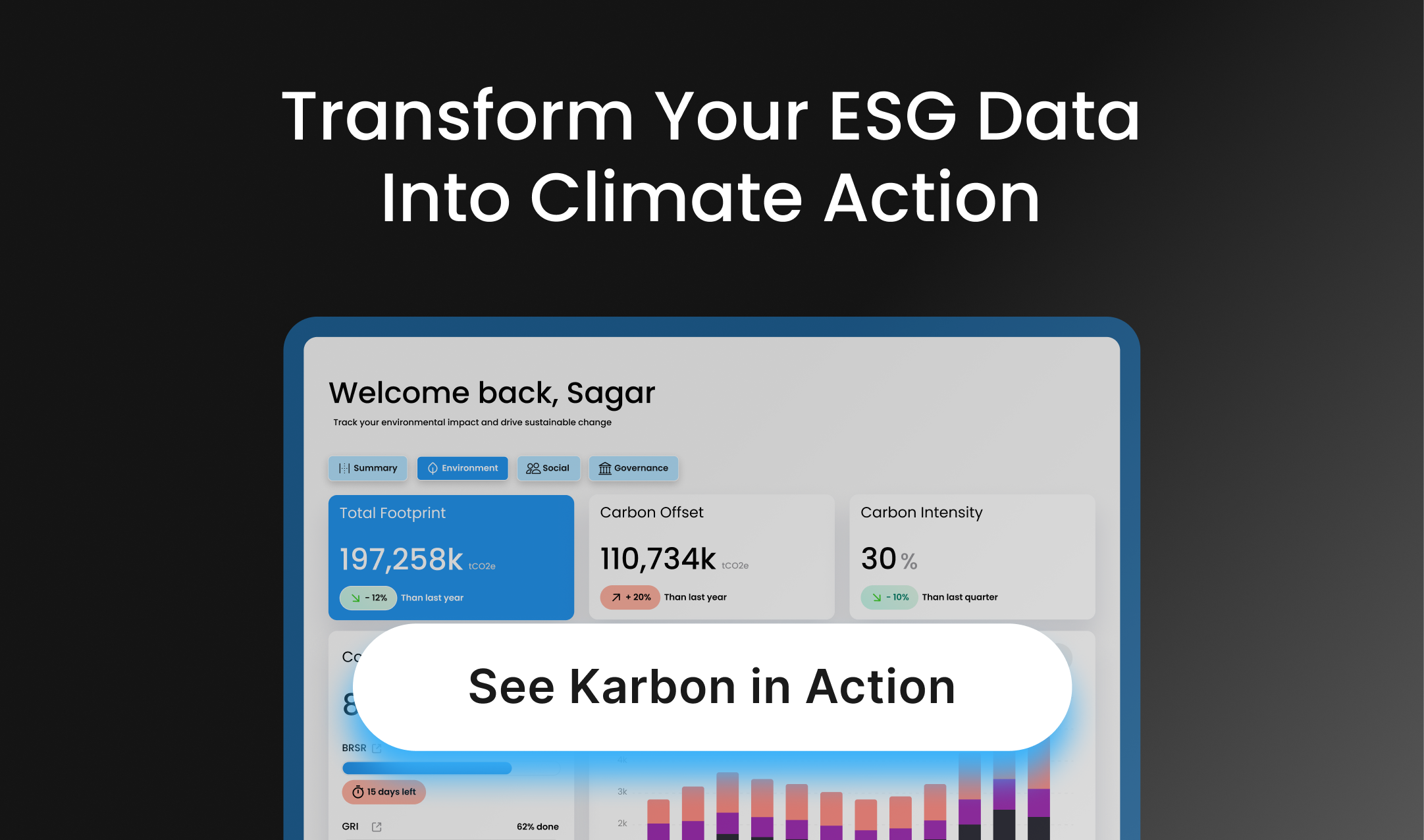
Karbon can help you implement these methodologies systematically.
Q: What if we can't get to 95% coverage?
You can exclude up to 5% of required Scope 3 emissions. But you must QUANTIFY all categories to prove exclusions stay under 5%. You can use "hotspot analysis" (high-level estimation) to do this—you don't need perfect data for excluded categories.
Q: Are fintechs really expected to report emissions from every transaction?
The framework creates a pathway for reporting payment-facilitated emissions, but guidance is still evolving. The key question: Is this material to your business? If payment processing fees represent significant revenue, and transactions enable high-carbon purchases, the argument for reporting gets stronger.
Q: Does Karbon already support Category 16 tracking?
Karbon is building Category 16 capabilities as the standard evolves. Our platform already tracks all 15 existing Scope 3 categories and maintains the flexibility to add new categories as they're finalized.
Q: When should we start preparing?
Now. Even though the standard isn't final, building the data infrastructure, understanding your exposure, and establishing tracking systems takes time. Companies starting now will be ready when requirements hit.
The Bottom Line
The GHG Protocol's introduction of Category 16 and the 95% boundary rule represent the biggest shift in corporate carbon accounting since 2011.
For Indian companies, three things are certain:
- Facilitated emissions are now on the map. If your business model involves intermediation, platforms, financial services, or distribution—you have Category 16 exposure.
- The 95% rule eliminates loose exclusions. You can't wave away inconvenient categories. Every exclusion needs numbers to back it up.
- Early preparation beats last-minute scrambling. Building data infrastructure, understanding exposure, and establishing tracking systems takes time. The companies starting now will have years of clean data when requirements hit.
The question isn't whether these changes are coming. It's whether you'll be ready when they arrive.
Ready to Navigate the New Carbon Accounting Landscape?
Don't wait for the final standard to start preparing. Build your infrastructure now.
See Karbon in action and discover how PlanetSustech can help you stay ahead of the biggest change in carbon accounting in fifteen years.