The CSO’s Role Is No Longer About Compliance - It’s About Competitiveness
Leadership & Strategy
PS Team
January 23, 2026
Table of Contents
In hard-to-abate sectors energy, metals, mining, cement, chemicals, heavy manufacturing, and large infrastructure—the role of the Chief Sustainability Officer (CSO) is undergoing a profound transformation.
What was once a function focused on emissions accounting, regulatory reporting, and assurance is rapidly becoming a core strategic leadership role. The forces driving this shift are unmistakable: Net Zero commitments are moving from aspiration to execution, carbon is becoming a cost line item, and regulatory frameworks such as CSRD and CBAM are redefining competitiveness across global value chains.
The question facing Boards and CEOs is no longer whether sustainability should influence strategy—but how deeply it must be embedded to protect margins, market access, and long-term license to operate.
From Compliance to Competitiveness
In hard-to-abate industries, sustainability is not a branding exercise. It directly shapes:
- Cost structures through carbon pricing and energy intensity
- Export competitiveness under CBAM-linked border adjustments
- Access to capital as lenders and insurers tighten climate-risk criteria
- Customer and OEM qualification across global supply chains
Traditionally, the CSO’s mandate has centered on managing Scope 1, 2, and increasingly Scope 3 disclosures. While this remains foundational, it addresses only a fraction of the strategic challenge ahead.
The next-generation CSO must help the organization reposition itself in a carbon-constrained economy—identifying where decarbonization investments create advantage, where operational efficiency protects margins, and where value chains must be re-engineered to remain viable.
Net Zero as an Operating Model, Not a Pledge
For energy-intensive sectors, Net Zero cannot be treated as a distant 2040 or 2050 commitment. It must be translated into near-term operating decisions:
- Asset-level decarbonization pathways
- Capital allocation between efficiency, fuel switching, electrification, and offsets
- Supplier engagement strategies to reduce embedded carbon
- Product-level carbon intensity tracking to support customer requirements
This fundamentally expands the CSO’s role—from reporting emissions to shaping how assets are operated, suppliers are selected, and products are designed and priced.
CSRD and CBAM: A Strategic Inflection Point
Regulations such as CSRD and CBAM represent a structural shift, particularly for exporters in hard-to-abate sectors.
CBAM is not merely a reporting obligation—it is a carbon cost exposure mechanism that directly impacts pricing, competitiveness, and contract viability in the EU and beyond. CSRD, meanwhile, demands enterprise-wide, auditable, decision-grade sustainability data tightly integrated with financial reporting.
In this environment, the CSO must operate at the intersection of:
- Sustainability and finance
- Operations and procurement
- Risk management and corporate strategy
This requires breaking traditional silos. Sustainability teams can no longer operate independently from procurement, supply chain, finance, and strategy functions. The CSO must act as an enterprise integrator, aligning decarbonization objectives with business performance.
Supply-Chain Transformation: The New Battleground
For hard-to-abate sectors, the majority of emissions—and regulatory risk—sit in the supply chain.
Supplier engagement is no longer optional. OEMs, EPCs, and operators are increasingly requiring:
- Verified supplier emissions data
- Transparent carbon intensity benchmarks
- Improvement roadmaps aligned to Net Zero trajectories
The CSO’s mandate must therefore extend beyond internal operations into ecosystem orchestration—driving data transparency, capability building, and accountability across hundreds or thousands of suppliers.
This shift transforms sustainability from a reporting function into a value-chain transformation agenda.
Why Technology and AI Are Now Non-Negotiable
The scale and complexity of this mandate cannot be managed through spreadsheets, static assessments, or annual reporting cycles.
Traditional approaches to materiality analysis, Scope 3 mapping, and scenario planning are too slow, fragmented, and resource-heavy for the pace of regulatory and market change facing hard-to-abate industries.
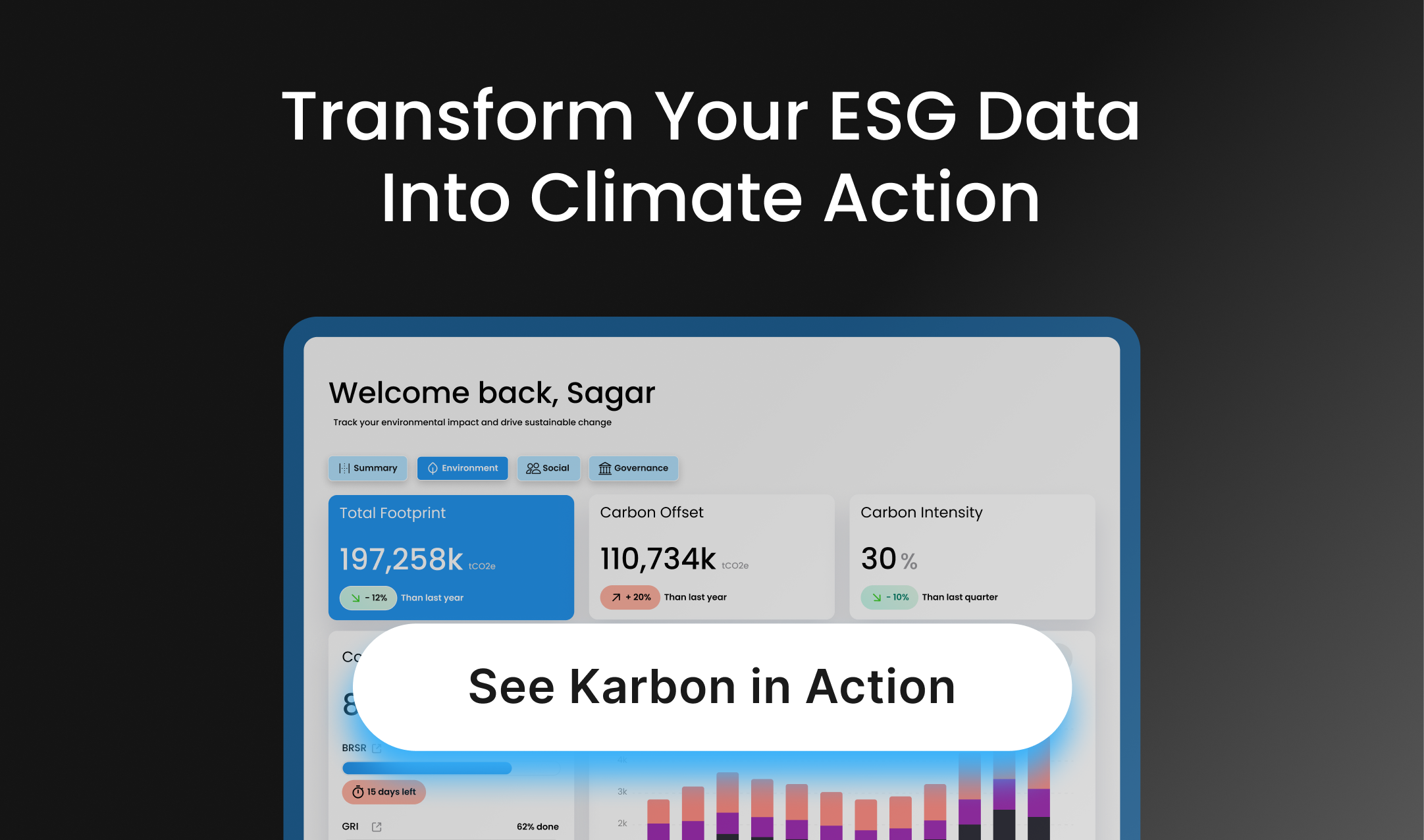
This is where digital ESG platforms and artificial intelligence—particularly generative AI—become mission-critical.
AI enables:
- Continuous, auditable emissions tracking across assets and suppliers
- Automated CBAM and CSRD data readiness
- Dynamic scenario modeling for carbon cost exposure
- Faster decision-making at the intersection of sustainability, finance, and operations
In effect, AI allows the CSO to move from reactive compliance to real-time strategic intelligence.
The CSO as Architect of Industrial Resilience
In hard-to-abate sectors, sustainability leadership is no longer about “doing less harm.” It is about preserving competitiveness, protecting market access, and enabling long-term growth in a carbon-constrained world.
The CSO of the future will be judged not by the number of reports produced, but by their ability to:
- Influence capital allocation and asset strategy
- Reduce carbon-related cost exposure
- Enable supply-chain readiness for CBAM and CSRD
- Translate Net Zero ambition into operational and financial outcomes
For organizations that empower the CSO with the right mandate, authority, and digital backbone, sustainability becomes not a constraint—but a strategic advantage.
Schedule Your Call