Your Simple Guide to Scope 3 Emissions
Carbon Accounting
PS Team
February 6, 2026
Table of Contents
What You Need to Know
Scope 3 emissions are the hidden carbon footprint of your business. They come from activities you don't directly control but are still part of your operations—like your suppliers, manufacturing products, employees driving to work, or customers using what you sell.
The bottom line: These emissions often make up 70-90% of your company's total carbon footprint. If you're serious about sustainability, you can't ignore them.
Why Should You Care?
Three simple reasons:
- It's where the real impact is - Your supply chain and products create far more emissions than your office lights
- Customers and investors are asking - Sustainability reporting is becoming standard, not optional
- You can actually save money - Finding emission hotspots often reveals inefficiencies that cost you
The 15 Categories Made Simple
Think of Scope 3 as everything outside your four walls:
What You Buy:
- Products and materials from suppliers
- Equipment and machinery
How Things Move:
- Shipping and transportation (both incoming and outgoing)
- Employee commutes and business travel
What Happens to Your Products:
- How customers use them
- What happens when they're thrown away
Everything Else:
- Waste from your operations
- Leased buildings or equipment
- Franchises and investments
How to Calculate (The Easy Way)
You don't need a PhD in environmental science. Here's the basic formula:
Activity Data × Emission Factor = Your Emissions
Example:
- You spent $100,000 on office supplies
- Office supplies have an emission factor of 1.34 kg CO2 per dollar
- Your emissions: 100,000 × 1.34 = 134,000 kg CO2 (or 134 tons)
Tools That Make Life Easier
Instead of calculating everything manually in spreadsheets (trust us, it gets messy), you can use:
- GHG Protocol's free guidelines - The industry standard everyone follows
- EPA's calculation tools - Government-backed and reliable
- Karbon by PlanetSustech - Connects to your existing systems and does the math automatically.
The smart move? Use a platform like Karbon that plugs into your accounting software and calculates everything for you.
Your Questions Answered
Q: What's the difference between Scope 1, 2, and 3?
Think of it like circles expanding outward:
- Scope 1: Emissions you create directly (your vehicles, your boilers)
- Scope 2: Emissions from the electricity you buy
- Scope 3: Everything else (your supply chain, business travel, product use)
Q: This sounds complicated. Where do I start?
Start small. Pick one category where you have good data—like business travel or purchased goods. Calculate that first. Then expand. You don't need perfect data on day one.
Q: Can't I just pay someone to do this?
You could hire consultants, but that gets expensive fast. Modern software tools can automate 80% of the work, letting you focus on actually reducing emissions instead of just counting them.
Q: Is this really worth the effort?
If you care about any of these, yes:
- Meeting customer or investor sustainability requirements
- Finding cost savings in your operations
- Staying ahead of coming regulations
- Actually making a difference for the environment
Getting Started: Your Action Plan
Week 1: Understand which Scope 3 categories apply to your business
Week 2: Gather data for your biggest emission sources (usually purchasing and transportation)
Week 3: Choose a calculation method or tool
Week 4: Run your first calculation and identify your hotspots
Ongoing: Set reduction targets and track progress
The Bottom Line
Scope 3 emissions aren't going away—they're becoming table stakes for doing business. The good news? The tools exist to make this manageable. You don't need to be a sustainability expert. You just need to start measuring.
Companies that tackle this now will have a competitive advantage. Those that wait will be scrambling to catch up when customers, investors, or regulations force their hand.
Ready to start? Focus on one category, use the right tools, and remember: progress beats perfection.
Calculate Your Scope 3 Emissions with Karbon
Understanding your carbon footprint is the first step. Taking action is what makes the difference.
PlanetSustech's Karbon makes Scope 3 emissions calculation simple, automated, and GHG Protocol compliant. Our platform integrates seamlessly with your existing ERP and accounting systems to deliver:
- Automated Supply Chain Emissions Tracking - No more manual spreadsheets
- GHG Protocol Compliant Reporting - Meet regulatory and investor requirements
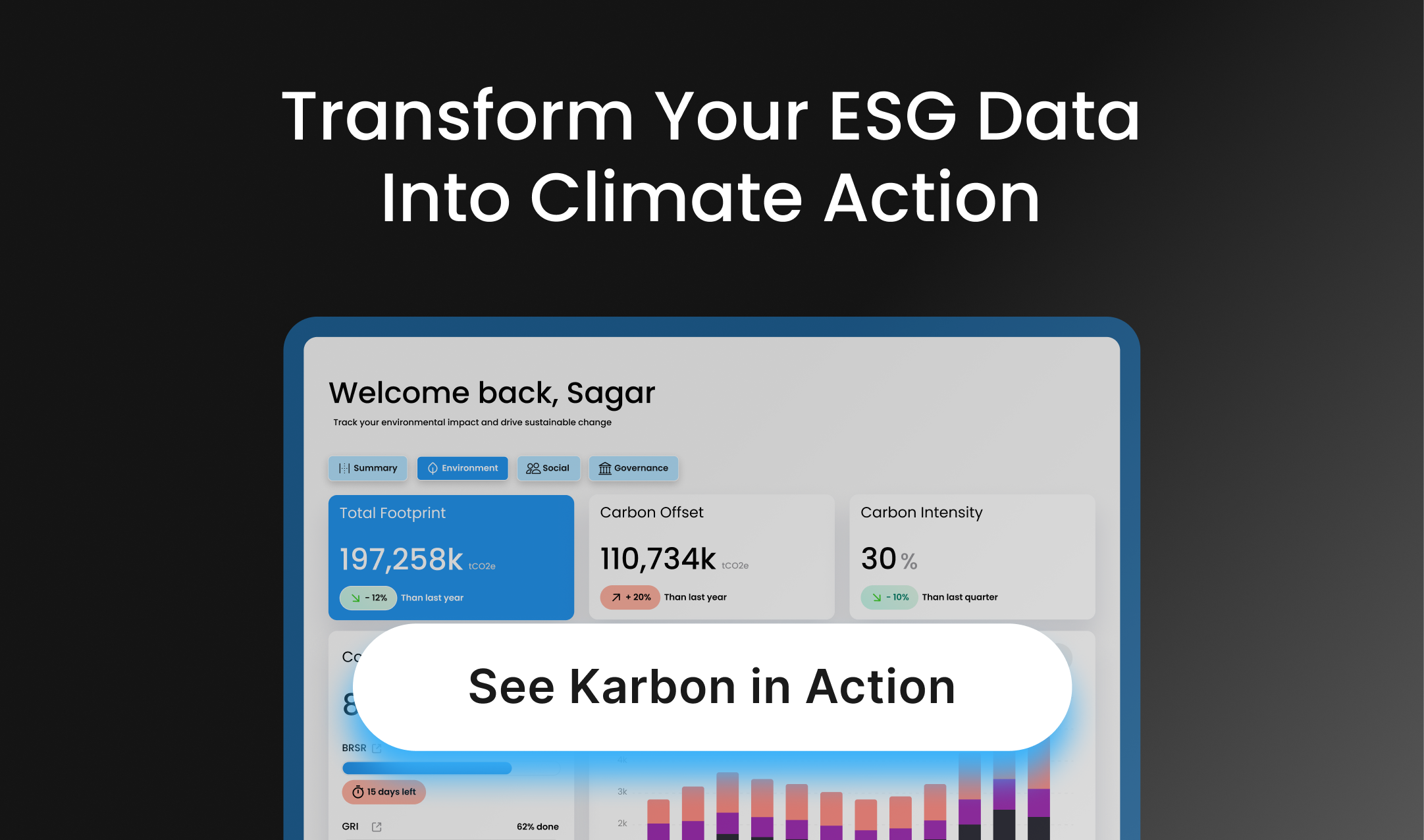
- Real-time Emissions Dashboard - See your carbon footprint at a glance
- Actionable Reduction Insights - Know exactly where to focus your efforts
Why Choose Karbon for Scope 3 Emissions Calculation?
Built on Enterprise-Grade Architecture
- Scalable for organizations of any size
- Secure data handling and compliance
- Seamless ERP and accounting system integration
Comprehensive Scope 3 Coverage
- All 15 Scope 3 categories included
- Upstream and downstream emissions tracking
- Supply chain emissions visibility
Automated & Accurate
- Real-time emissions calculations
- Updated emission factors from trusted databases
- Eliminate manual data entry errors
GHG Protocol Compliant Reporting
- Generate audit-ready reports instantly
- Meet BRSR, GRI, DFM, and other ESG disclosure requirements
- Streamline sustainability reporting workflows
Frequently Searched Questions About Scope 3 Emissions Calculation
How do you calculate Scope 3 emissions?
Calculate Scope 3 emissions by multiplying your activity data (purchases, miles traveled, etc.) by the appropriate emission factors. Tools like Karbon automate this process using GHG Protocol methodologies.
What software is best for Scope 3 emissions tracking?
Karbon by PlanetSustech is purpose-built for Scope 3 emissions calculation, offering automated supply chain tracking, GHG Protocol compliance, and ERP integration.
How long does Scope 3 calculation take?
Manual calculation can take weeks or months. With Karbon's automated platform, you can calculate Scope 3 emissions in hours, not weeks.
Is Scope 3 emissions reporting mandatory?
While requirements vary by region and industry, Scope 3 reporting is increasingly expected by investors, customers, and regulations like the SEC climate disclosure rules and EU CSRD.
What are the 15 categories of Scope 3 emissions?
The GHG Protocol defines 15 Scope 3 categories covering upstream activities (purchased goods, transportation, business travel) and downstream activities (product use, end-of-life treatment).
Ready to Simplify Your Scope 3 Emissions Calculation?
Stop struggling with spreadsheets. Start making real progress on your sustainability goals.
Schedule a personalized demo of Karbon and see how PlanetSustech can transform your emissions tracking from overwhelming to effortless.